
How to Budget for OnlyFans Without Overspending
Building a budget for OnlyFans is easier than many people expect, but it does require a written plan. Free pages remove the subscription fee, not the spending. Tips, pay-per-view unlocks, and paid messages all carry a cost, and they arrive one small charge at a time. That pattern is exactly why a monthly number written down before you follow anyone keeps the total predictable.
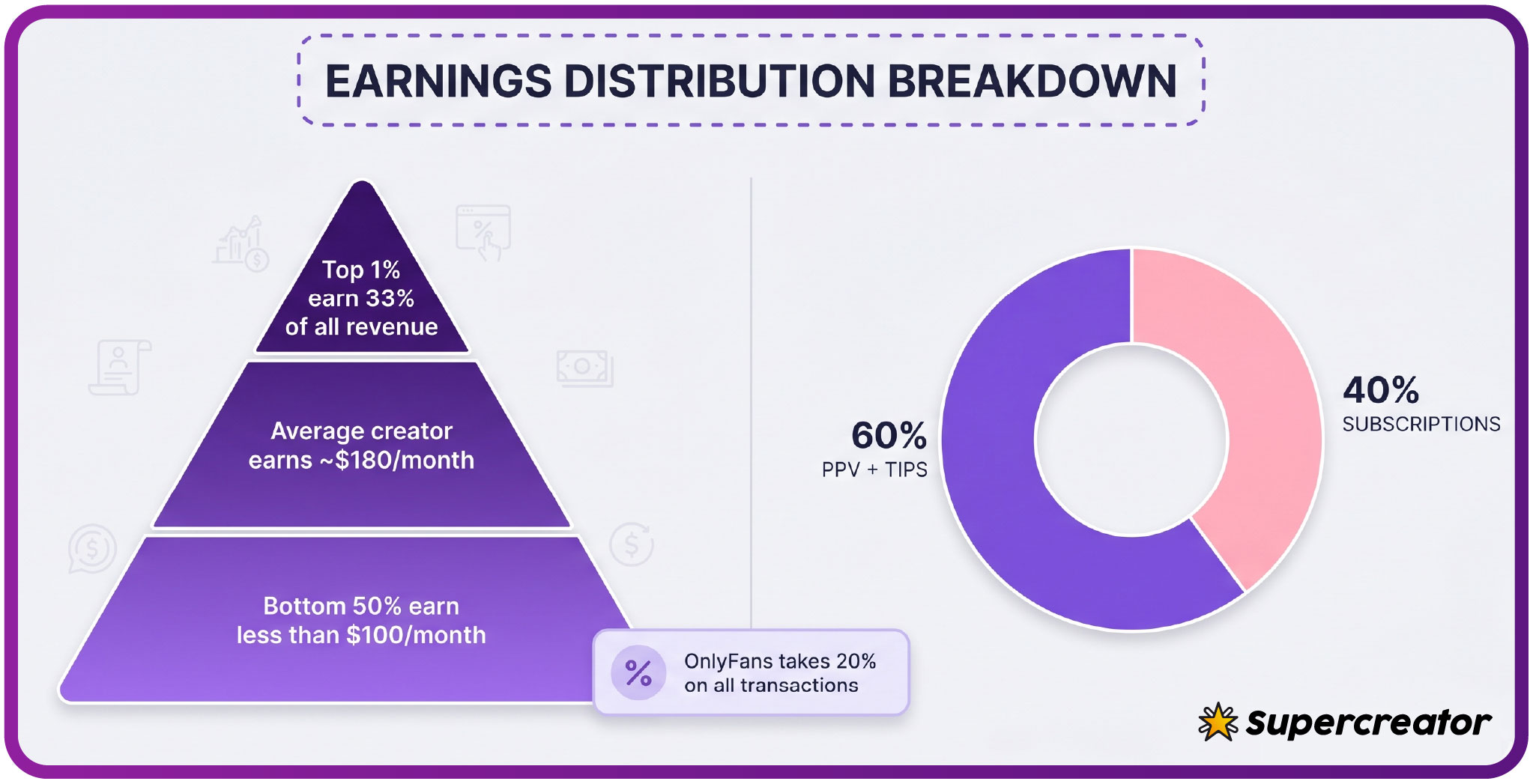
A free page sets its subscription price to $0. The creator earns through pay-per-view messages and tips instead. Paid pages run from a $4.99 minimum to a $49.99 maximum, with most sitting between $4.99 and $15 that averages $5 to $10. Neither model is cheaper by default, because the money moves through different doors. The platform fee is 20% on everything, whether that is a subscription, a tip, or a PPV unlock, so the creator keeps 80%.
Why free pages still cost money
The word “free” describes the subscription line only. Every other interaction on the page still has a price attached. A tip of a few dollars, sent a few times a week, quietly becomes a real monthly figure. PPV unlocks behave the same way because each one feels small at the moment of purchase.
Paid messages are the easiest charge to lose track of. They rarely appear as a single large amount, and they often sit between other small charges in a statement. By the time a month ends, the sum can surprise you even though no individual charge looked serious.
- Tips sent after a post or a live session, often in small amounts
- Pay-per-view unlocks inside direct messages
- Paid reply messages and custom requests
- Renewals on paid pages you forgot you kept
- Duplicate follows across pages with similar content
None of these charges is a mistake on its own. The problem is that they are invisible until you total them. A budget turns a set of small decisions into one number you can see and check.
Setting a monthly number before you follow
Pick the cap before you browse, not after. Choose an amount you could lose for one month without changing anything else in your life. Write it down somewhere you will see it, because a number that stays in your head is not a budget.
Split the cap across the pages you follow. If you follow three pages and your cap is $30, each page gets $10 for the month, including tips and unlocks on that page. Pages with no subscription fee still get an allocation, since they generate charges through messages and tips.
| Monthly cap | Pages followed | Per page | Notes |
|---|---|---|---|
| $10 | 1 | $10 | One paid page, no tips |
| $25 | 2 | $12.50 | Room for a few unlocks |
| $40 | 3 | $13.33 | Mixed free and paid |
| $60 | 4 | $15 | Tips included per page |
Treat the per-page figure as a ceiling, not a target. If one page gets less attention that month, the leftover stays in the pool rather than moving to another page automatically. Keeping the pool intact is what makes the plan survive an unexpected charge later.
Practical tip: write your monthly cap on a note next to your payment method before you open any page. A budget you cannot see at the moment of spending is only a wish.
Tracking every charge in one place
One list beats three apps. Open a single note or spreadsheet and add a line the moment a charge happens. Logging at the end of the week fails because most people cannot rebuild a week of small charges from memory.
Record enough detail that the line makes sense a month later. A row that says “$8” tells you nothing. A row that names the page, the date, and the type of charge tells you whether the spending was planned or accidental.
- Date of the charge
- Page name or handle
- Type: subscription, tip, PPV unlock, paid message
- Amount charged
- Whether it was planned or unexpected
The planned-or-unexpected column is the most useful one. After two months it shows which pages generate surprise charges and which stay inside their allocation. That pattern, not the total alone, tells you where to adjust.
Weekly and monthly review habits
Set one short review each week and one longer review each month. The weekly check takes a few minutes and catches charges while you still remember them. The monthly check compares your total against the cap you wrote down.
During the weekly check, open your bank or card statement next to your log. Match every line and mark anything missing. If a charge has no matching entry, add it and note it as unexpected.
- Subscription renewals on paid pages
- Tips sent across the month
- PPV unlocks inside messages
- Paid replies and custom requests
- Any promotional first-month price returning to full price
When you go over budget, do not cancel everything in a rush. Move the extra amount out of next month’s pool instead. If the overage repeats, the cap was set too high for your income, so lower it rather than trying harder to resist. For a starting point, onlyfans free best collects free pages.

When to pause or unfollow a page
Review each page against two questions: how much did it cost, and how much did you actually use it? A page you opened twice but spent $20 on is a candidate for pausing. A page that stayed inside its allocation and gets regular attention can stay.
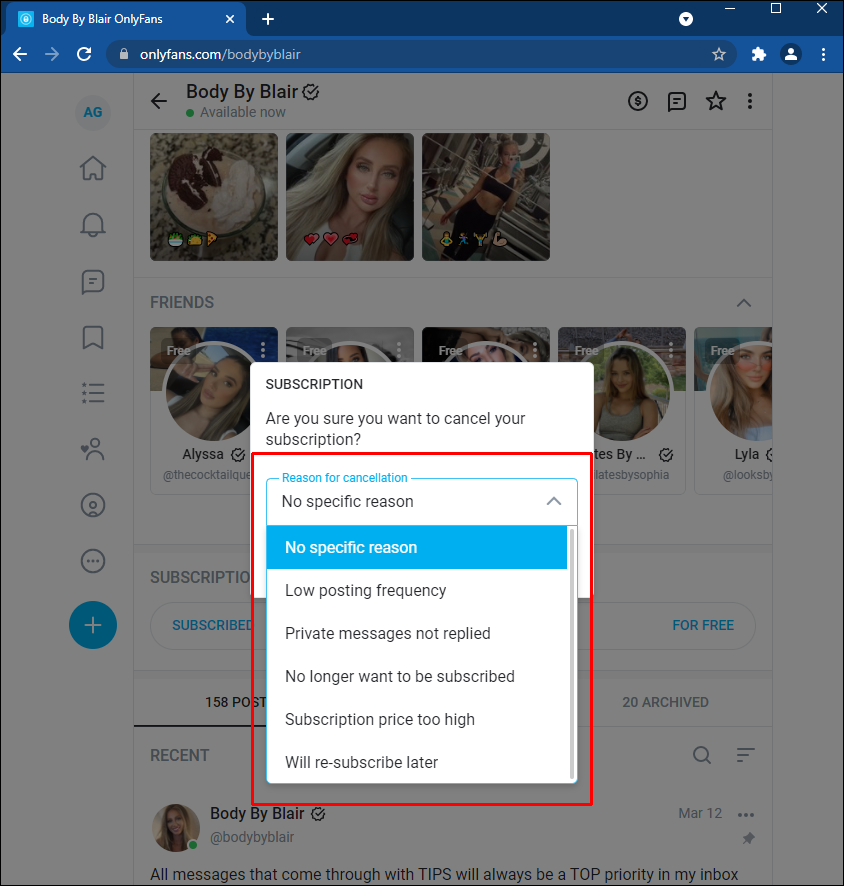
Pausing a subscription is not the same as losing access immediately. When a creator raises the subscription price, auto-renew stops, and existing access lasts until the current paid period ends. That rule gives you a natural window to decide without losing what you already paid for.
| Action | When it applies | What to check |
|---|---|---|
| Keep | Inside allocation, used regularly | Renewal date and price |
| Pause | Near cap, low recent use | Auto-renew setting |
| Drop | Repeated overages, unused | Pending charges |
Cut from the bottom of your list, not the top. The pages you use least are the easiest to remove and the least likely to be missed. Removing one page frees its allocation for the rest of the month without changing your overall cap.
Handling surprise charges calmly
An unexpected charge is usually a renewal, a tip you forgot, or a price change. Check your auto-renew settings first, because that is where most surprises start. Then compare the amount against your log before assuming anything went wrong.
If a charge genuinely looks incorrect, gather the date and amount before contacting support. A clear record makes the conversation shorter and gives you something concrete to reference. Meanwhile, keep the charge in your log so the month’s total stays accurate.
- Confirm whether auto-renew was on for that page
- Match the charge to a tip, unlock, or message
- Check whether a promotional price ended
- Save the date, amount, and page name
- Contact support only after the first four steps
OnlyFans has no built-in discovery feed or directory, which is why ranking sites exist. That matters for budgeting because it means the pages you find are often the pages other people already pay for. BestOnlyFans is one of the places people compare free pages before following, and a quick look at a listing costs nothing.
Use that comparison step inside your existing cap rather than adding a new one. Browse first, then decide, then log the follow as a planned charge. Ranking sites help you find pages, but they do not change what those pages cost once you subscribe. A short check before following prevents the most common overspend, which is joining several pages in one evening.
As your list grows, revisit the per-page split instead of raising the total. If a new page matters more than an old one, drop the old one first. BestOnlyFans listings can make that swap easier to plan because you can compare options before committing. Over time the habit matters more than any single month.
Extra detail
Most budget failures come from small process mistakes rather than large purchases. Fix the process and the total follows. Watch for these common errors.
- Setting a cap but never writing it down
- Logging charges weekly instead of immediately
- Counting only subscriptions and ignoring tips
- Following several free pages at once with no allocation
- Ignoring promotional prices that return to full price
- Keeping auto-renew on for pages you rarely open
One more habit helps: review your payment method settings each month. Turning on alerts for every charge makes small spending visible without extra effort. It also shortens the gap between spending and noticing, which is where most budgets quietly break. BestOnlyFans refreshes its rankings every month.
FAQ
Do free pages cost anything at all?
The subscription is $0, but tips, PPV unlocks, and paid messages still cost money.
What is the lowest paid subscription price?
The minimum is $4.99, and only promotional first months may dip below that figure.
Why did auto-renew stop on a page I follow?
Auto-renew stops when a creator raises the subscription price, and access lasts until the current paid period ends.
How much does the platform take from each charge?
The platform fee is 20% on subscriptions, tips, and PPV, so the creator keeps 80%.
A written cap, a single log, and two short reviews a month are enough to keep spending predictable. The total stays boring, which is exactly the goal. For a starting point on which free pages to compare, see this list of onlyfans free best options before you set your next monthly number.